.png)
-p-130x130q80.png)
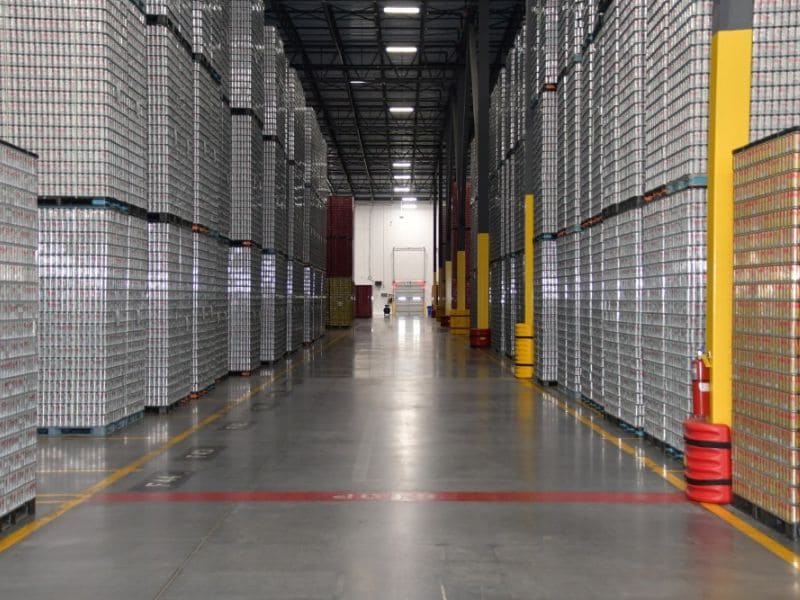
Enterprise supply chains are more complex than ever. By 2026, large organizations are managing higher order volumes, multi-channel distribution, stricter compliance standards, and rising customer expectations for speed and accuracy.
Choosing the best 3PL for enterprise companies is no longer just an operational decision, it’s a strategic one that directly impacts cost control, customer satisfaction, and long-term growth.
In this guide, we’ll break down what matters most in 2026, how enterprise logistics is evolving, and which enterprise 3PLs stand out for large-scale operations without fluff or vague promises.
Enterprise companies don’t face the same challenges as startups or mid-sized businesses. Scale changes everything. Large organizations often deal with:
A standard logistics provider simply can’t handle these demands. That’s why 3PLs for large enterprises must offer far more than storage and shipping.
The best enterprise 3PL providers act as an extension of your internal supply chain team, not just a vendor. In 2026, enterprise logistics is defined by:
Unlike general 3PL guides, this article concentrates on enterprise-only requirements. Here’s what we cover:
If you’d like to learn more about the leading 3PL providers in North America, check out our comprehensive guide to the Top 3PL Companies.
Before reviewing top providers, it’s important to understand what actually makes a 3PL enterprise-ready.
Enterprise logistics leaves no room for trial and error, so it’s crucial to partner with providers who have a track record of handling complex, large-scale operations successfully. Look for providers with:
Your 3PL must grow with you, offering flexible solutions that adapt to increasing volumes, seasonal fluctuations, and evolving business needs. This includes:
Enterprise companies rely on advanced systems that streamline operations, improve visibility, and reduce errors—making seamless integration essential. Your enterprise 3PL should support:
From food safety to regulated goods, compliance matters—because even minor gaps can result in costly fines, operational delays, or long-term reputational damage. A strong enterprise 3PL understands:
You can explore how enterprise-focused providers handle this in more detail here:
→ Why Enterprises & Growing Companies Trust Buske Custom 3PL
Below are some of the most trusted enterprise 3PL providers based on scale, reliability, and enterprise-level capabilities.
Note: This list is not ranked by size alone. It prioritizes operational strength, customization, and enterprise readiness.
Buske Logistics stands out as one of the best 3PLs for enterprise companies because of its custom-first approach. Unlike traditional 3PLs that force enterprises into rigid systems, Buske designs logistics solutions around the client’s exact needs.
Best for: Large enterprises that need tailored logistics solutions, not one-size-fits-all services.
Why Buske is a Top Enterprise 3PL
Buske supports complex enterprise supply chains across food & beverage, manufacturing, retail, and regulated industries.
If you’re evaluating 3PLs for large enterprises that require flexibility and control, Buske is a strong fit.
→ Learn more about Buske’s enterprise capabilities here: Enterprise Logistics Solutions
DHL Supply Chain is a global logistics leader trusted by enterprise companies for its scale, technology, and operational excellence. Unlike smaller providers, DHL leverages its worldwide network and advanced supply chain solutions to support complex, high-volume enterprise operations across multiple industries.
Best for: Global enterprises with international supply chains.
DHL Supply Chain is one of the largest enterprise 3PL providers in the world. It excels in:
Strengths
Limitations
DHL is ideal for enterprises with standardized, global logistics needs.
XPO Logistics is a strong choice for technology-driven enterprises that require data-led, highly automated supply chain solutions. Unlike traditional logistics providers, XPO places advanced analytics, automation, and digital visibility at the core of its enterprise logistics operations.
Best for: Enterprises focused on data, automation, and performance optimization.
XPO is known for its technology-forward approach to enterprise logistics. Their strengths include:
Strengths
Limitations
XPO is a strong choice for enterprises that value technology over customization.
Ryder Supply Chain Solutions is ideal for enterprise companies that prefer an asset-based logistics partner with full control over transportation and warehousing. Unlike non-asset providers, Ryder owns and operates its fleet, facilities, and equipment, giving enterprises greater reliability, accountability, and end-to-end supply chain consistency.
Best for: Enterprises needing transportation and warehousing under one provider.
Ryder combines asset-based transportation with enterprise 3PL services, offering:
Strengths
Limitations
Ryder is ideal for enterprises where transportation is a critical factor.
NFI Industries is a strong fit for retail and consumer goods enterprises that need scalable warehousing and distribution support. Unlike generic 3PLs, NFI specializes in high-volume fulfillment, omnichannel distribution, and complex retail supply chains built around speed and efficiency.
Best for: Large retail and CPG enterprises.
NFI Industries specializes in:
Strengths
Limitations
NFI works well for enterprises with predictable retail demand.
Kuehne + Nagel is a top choice for enterprise companies managing complex global supply chains across air, ocean, and contract logistics. Unlike regionally focused 3PLs, Kuehne + Nagel delivers end-to-end international logistics expertise with strong carrier relationships and global visibility.
Best for: Enterprises with heavy international freight needs.
Kuehne + Nagel excels in:
Strengths
Limitations
This provider is best suited for global enterprise operations.
For large-scale businesses, the right third-party logistics partner can directly impact operational efficiency, scalability, and long-term growth. Choosing the best 3PL for enterprise companies isn’t about picking the biggest name. It’s about alignment.
Ask these questions:
If the answer is no, they’re not the right enterprise 3PL.
In today’s rapidly evolving market, one-size-fits-all logistics solutions no longer cut it. Enterprise companies are moving away from generic models, seeking agile and personalized approaches to meet unique customer demands. Customization allows:
This is why many enterprises are shifting toward custom enterprise 3PL providers instead of massive, rigid networks.
According to the U.S. Department of Transportation, supply chain disruptions and compliance failures remain a major risk for large organizations. This is where experience truly matters.
Enterprise 3PLs must proactively manage:
Internal Resources for Enterprise Decision-Makers
If you’re still researching the right partner, these resources may help:
The best third-party logistics (3PL) provider for enterprise companies depends on factors such as supply chain complexity, geographic reach, industry requirements, and technology needs. Enterprise businesses often look for 3PL partners that offer scalable warehousing, transportation management, fulfillment, inventory visibility, and custom logistics solutions. For organizations seeking tailored supply chain support, providers like Buske Logistics offer customized logistics programs, while global providers such as DHL and Kuehne + Nagel are known for extensive international networks and cross-border logistics capabilities. The right choice depends on your operational goals, service requirements, and long-term growth strategy.
An enterprise-ready 3PL combines scalable infrastructure, advanced technology, operational expertise, and proven experience managing complex supply chains. Key capabilities include multi-site warehousing, transportation management, ERP integration, real-time inventory visibility, compliance support, and dedicated account management. Enterprise logistics providers must also be able to handle high order volumes, multiple distribution channels, and evolving customer demands. These capabilities help large organizations improve efficiency, maintain service levels, and support long-term business growth.
Enterprise 3PL providers may involve higher initial costs than smaller logistics providers due to their broader capabilities, technology investments, and specialized services. However, many enterprise companies realize significant long-term savings through optimized transportation, improved inventory management, reduced labor costs, and greater operational efficiency. A strategic 3PL partnership can also minimize supply chain disruptions, improve customer service, and increase scalability. When evaluating costs, businesses should consider total return on investment rather than pricing alone.
Custom 3PL solutions allow enterprise companies to align logistics operations with their specific business goals, product requirements, and customer expectations. Tailored logistics programs can improve inventory visibility, streamline fulfillment workflows, reduce operational waste, and support omnichannel distribution strategies. Customized solutions also provide greater flexibility to adapt to market changes, seasonal demand fluctuations, and business expansion initiatives. As supply chains become more complex, personalized logistics strategies help enterprises maintain efficiency and competitive advantage.
Enterprise 3PL services provide significant value across industries with complex supply chains, high compliance requirements, and large-scale distribution needs. Industries such as manufacturing, food and beverage, retail, healthcare, automotive, consumer packaged goods (CPG), and industrial products often rely on enterprise logistics providers to manage inventory, transportation, warehousing, and fulfillment operations. These industries benefit from enhanced visibility, regulatory compliance support, and scalable logistics infrastructure that supports business growth while maintaining operational consistency.
Yes, leading enterprise 3PL providers offer integration with major enterprise resource planning (ERP) platforms, warehouse management systems (WMS), and transportation management systems (TMS). Common integrations include platforms such as SAP, Oracle ERP, and NetSuite. These integrations enable real-time data sharing, inventory synchronization, order visibility, automated reporting, and improved supply chain decision-making. Seamless system connectivity helps enterprise organizations achieve greater operational efficiency and end-to-end supply chain visibility.
Enterprise logistics is no longer about moving boxes. It’s about protecting your brand, controlling costs, and enabling growth. The best 3PLs for enterprise companies in 2026 are those that:
If you’re ready to explore a custom enterprise logistics solution, the next step is simple.
→ Contact Buske Logistics to discuss your enterprise supply chain needs with a team that understands complexity at scale.


