.png)
-p-130x130q80.png)
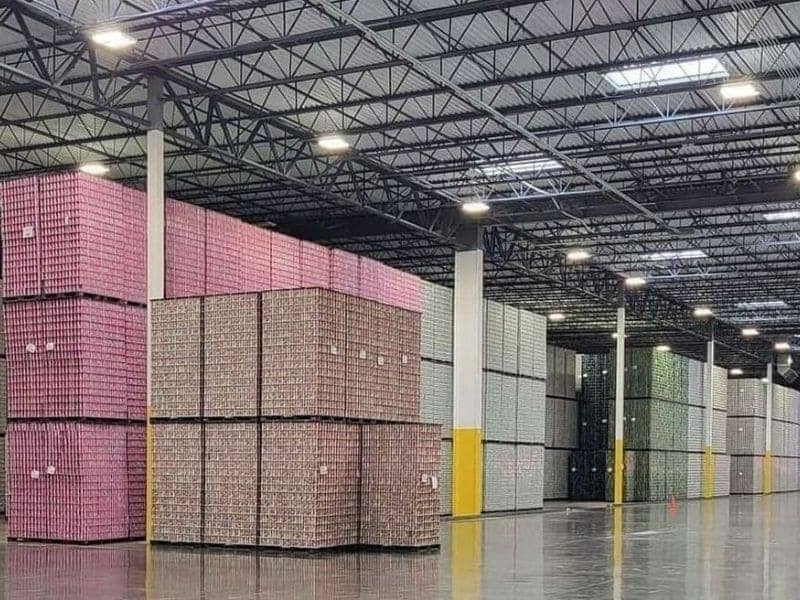
Finding the best contract warehousing companies in North America is no longer just about storage space. Today, businesses need long-term partners that can scale with demand, protect inventory, improve fulfillment speed, and reduce total logistics costs across the USA and Canada.
If you are evaluating contract warehousing companies or contract warehousing providers, this guide is built for you. We’ll break down what contract warehousing really is, how it differs from traditional 3PL warehousing, what to look for in a provider, and most importantly which companies stand out as the top contract warehousing companies in North America.
Contract warehousing is a long-term warehousing agreement where a provider designs and operates a dedicated warehouse solution specifically for your business. Unlike shared or transactional warehousing, contract warehousing is built around your volume, labor needs, technology, and growth plans.
If you want a deeper explanation, you can read our full guide here:
→ Contract Warehousing: Complete Guide
Key Characteristics of Contract Warehousing:
This model is ideal for manufacturers, retailers, and distributors with stable or growing volumes in North America.
According to the U.S. Bureau of Transportation Statistics, freight movement and logistics activity continue to evolve across North America, making long-term contract warehousing solutions increasingly valuable for companies seeking stability and efficiency in their supply chains.
As a result, businesses are turning to contract warehousing providers for:
Contract warehousing is no longer just for large enterprises. Mid-sized companies with predictable volume are also adopting this model to gain control without owning facilities.
To identify the best contract warehousing companies in North America, we evaluated providers based on:
This list focuses on companies that consistently deliver dedicated, contract-based warehousing solutions, not just short-term storage.
Best Overall Contract Warehousing Company in North America
Buske Logistics is widely recognized as one of the leading contract warehousing companies in North America, with a strong presence across the United States and Canada. Unlike providers that rely on shared warehousing models, Buske specializes in customized, long-term contract warehousing solutions backed by more than 100 years of logistics experience.
Why Buske Logistics Stands Out
Buske operates as an extension of your business, not just a storage provider. This makes them an excellent choice if you are searching for the best contract warehousing company in the USA or expanding into Canada.
Learn more about Buske’s contract warehousing solutions here.
DHL Supply Chain is one of the largest logistics providers in the world and a major player among top contract warehousing companies in North America. DHL is best suited for large global brands with complex, high-volume supply chains.
Strengths:
Considerations:
Ryder has expanded well beyond transportation and now offers strong contract warehousing services across North America. They are a solid option if you want combined warehousing and transportation under one provider.
Strengths:
Considerations:
XPO remains a recognizable name among contract warehousing providers in North America. They work well for companies looking for a broad logistics partner rather than a warehousing-only expert.
Strengths:
Considerations:
Lineage Logistics is one of the top contract warehousing companies for temperature-controlled environments. Lineage is a top choice for food and beverage companies needing long-term cold storage contracts.
Strengths:
Considerations:
Americold is another major player focused on cold storage and food-grade contract warehousing. They are best for companies seeking specialized food-grade contract warehousing.
Strengths:
Considerations:
NFI Industries offers contract warehousing as part of its integrated supply chain services. NFI is a good option for companies looking for retail-focused warehousing in the USA.
Strengths:
Considerations:
If your operations are primarily U.S.-based, the best contract warehousing company in the USA depends on your need for customization, industry expertise, and long-term scalability.
For companies that want:
Buske Logistics consistently stands out as a top choice.
Canada presents unique logistics challenges, including cross-border compliance, regional distribution, and labor availability. Companies operating in Canada should look for:
Providers like Buske Logistics, DHL Supply Chain, and Lineage Logistics are well-positioned to support contract warehousing in Canada, with Buske offering a more customized, client-focused approach.
Before signing a long-term agreement, ask these questions:
1. Do They Specialize in Contract Warehousing?
Some providers offer contract warehousing as an add-on. You want a company where contract warehousing is a core service.
2. Can They Customize the Operation?
Your business should not be forced into a standard model. The best contract warehousing companies design solutions around your needs.
3. Do They Support Growth?
Your provider should scale space, labor, and technology as your volumes grow.
4. What Technology Do They Use?
A strong WMS, real-time inventory visibility, and reporting are essential.
5. Do They Understand Your Industry?
Industry experience reduces onboarding time and operational risk.
If long-term efficiency and control matter, contract warehousing is often the better choice.
Buske Logistics is not just another name on a list. We are built around contract warehousing as a core service, making us a trusted partner for companies seeking long-term stability and performance. Our expertise has helped support the supply chain operations of globally recognized brands including Diageo, PepsiCo, Ardagh, Stellantis, Ford, Morgan Foods, and Starbucks, reinforcing Buske’s reputation as a dependable warehousing and logistics provider for both mid-sized businesses and Fortune 500 companies.
Here are some key advantages of partnering with Buske Logistics for your contract warehousing needs:
If you’re evaluating providers seriously, Buske should be part of your shortlist.
→ Talk to a contract warehousing expert today.
The main difference between contract warehousing and traditional 3PL warehousing is the structure and commitment of the relationship. Contract warehousing is a long-term, dedicated arrangement (typically 3 to 10 years) in which a 3PL provider designs, staffs, and operates a warehouse exclusively or primarily for one client, often with custom workflows, technology integrations, and value-added services tailored to that client's products. Traditional 3PL warehousing, by contrast, is usually shared (often called public or multi-client warehousing), shorter-term, and more transactional, with multiple brands sharing the same facility, labor pool, and technology. Contract warehousing offers more customization, predictability, and operational alignment, while shared 3PL warehousing offers lower commitment and faster onboarding.
Contract warehousing agreements typically last between 3 and 10 years, with 5 years being the most common term in North America. The exact length depends on the complexity of the operation, the level of infrastructure or automation investment required, the volume of inventory and orders, the customization of workflows and technology, and the risk-sharing model between the shipper and 3PL provider. Longer agreements often unlock lower per-unit costs and dedicated capital investments such as build-to-suit facilities, racking systems, or automation, while shorter agreements provide more flexibility for businesses still validating long-term volume forecasts.
Contract warehousing is not necessarily more expensive than shared 3PL warehousing or self-managed operations, especially when measured on a total cost of operations basis over the life of the contract. While contract warehousing can require higher upfront commitment and dedicated resources, the model typically delivers lower per-unit costs through optimized labor, custom layouts, integrated technology, and pre-negotiated carrier rates, along with greater cost predictability across multi-year budgets. For brands with consistent or growing volumes, contract warehousing usually produces lower long-run logistics costs than shared warehousing, while removing the capital risk of building a private facility.
Contract warehousing is best suited for manufacturers, retailers, ecommerce brands, distributors, and CPG companies with consistent or growing order volumes, multi-channel distribution needs, specialized handling requirements, or strict regulatory compliance obligations. Companies that benefit most include those shipping more than a few hundred orders per day, operating in regulated industries (such as food and beverage, alcohol, healthcare, or aerospace), running multi-shift operations, or requiring dedicated equipment, automation, or customized workflows. Contract warehousing is generally not the best fit for very low-volume startups or businesses with highly unpredictable demand, which are usually better served by shared, public, or transactional 3PL warehousing.
Yes, contract warehousing is designed to scale with business growth, and leading providers build flexibility directly into the contract structure. Scalable contract warehousing solutions can expand storage footprint, add additional shifts and labor, integrate new automation, open additional warehouse locations across multi-node networks, and adapt service offerings as the client's volume, SKU count, and channel mix evolve. Mature 3PLs also support growth by adding value-added services such as kitting, packaging, retail compliance, or international distribution as needs arise, allowing brands to scale revenue without rebuilding their logistics infrastructure each time they enter a new market.
The industries that benefit most from contract warehousing include food and beverage, automotive and aftermarket parts, manufacturing, retail and ecommerce, consumer packaged goods (CPG), alcohol and beverage, healthcare and pharmaceuticals, aerospace, and industrial supplies. These sectors gain the greatest value because they typically have complex storage requirements, specialized regulatory compliance needs (such as FSMA, HACCP, FDA, or AS9100), high inventory volumes, multi-channel distribution, or seasonal demand patterns that benefit from dedicated, customized warehouse operations. Contract warehousing provides the consistent service levels, certified infrastructure, and operational expertise these industries require, without the capital cost of owning their own facilities.
To choose the best contract warehousing company in North America, prioritize providers with proven industry specialization, strong financial stability, advanced warehouse management technology (WMS, OMS, TMS, EDI/API integrations), customization capabilities, certifications relevant to your industry, multi-node geographic coverage across the U.S., Canada, and Mexico, scalable labor and capacity, and a long-term partnership philosophy backed by transparent KPIs and SLAs. Other key evaluation criteria include client references in your industry, order accuracy and on-time shipping performance, ERP and ecommerce integration experience, sustainability practices, and the cultural fit between your team and the 3PL's account management. A facility tour and a structured RFP process are both strongly recommended before signing any long-term agreement.
Choosing among the best contract warehousing companies in North America is a strategic decision that directly impacts cost control, service levels, and long-term customer satisfaction.
If you’re looking for a true long-term logistics partner, dedicated warehouse operations tailored to your business, predictable and transparent costs, scalable capacity to support growth, and proven expertise across the USA and Canada, Buske Logistics is ready to support your supply chain needs.
For businesses that value reliability, customization, and a growth-first approach, Buske Logistics consistently stands out as one of the best contract warehousing companies in North America.
If you’re exploring contract warehousing solutions or want to understand what a dedicated, customized warehouse operation could look like for your business, start a conversation with Buske Logistics today.


